


Creating Hair Regimens From Our Hair's Porosity
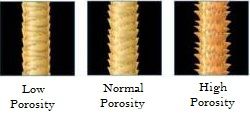
Porosity is our hair's ability, or inability, to absorb moisture/water. There are three categories: low, normal/medium, and high.
"Black hair tends to have low porosity naturally and is usually less porous than Caucasian or Asian hair types unless it has been chemically processed."
-- Audrey Davis-Sivasothy, The Science of Black Hair
Porosity Test
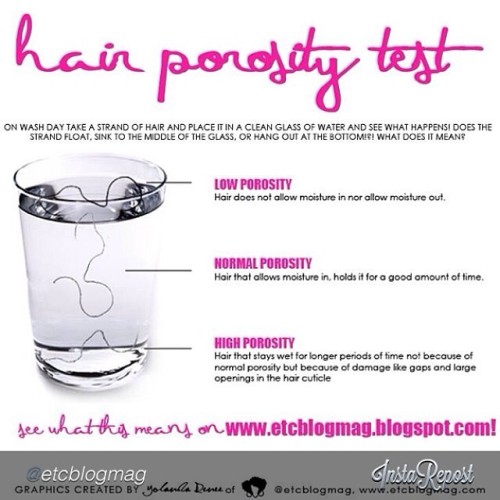
Do a porosity test on a clean strand of hair (no products). Place the strand into a glass of room temperature water and let it sit for about 3 minutes.
- High Porosity Hair -- hair sinks to the bottom. Normally, this hair soaks up moisture then becomes dry because hair cuticles are wide open and/or damaged. This category is due to damage from heat styling tools, chemical relaxers or color, the sun, and/or sulfate rich shampoo. Maybe genetics like some have suggested. Needs protein treatments to fill-in the holes/gaps.
- Low Porosity Hair -- hair floats at the top and takes a long time to sink. Normally, this hair takes forever to get wet and/or to dry. Products sit on the hair and won't penetrate. This category is due to genetics. Needs moisture and steam.
- Medium/Normal Porosity Hair -- hair is in the middle of the glass. Continue to do what you're doing. Your hair is normal porosity because of genetics or proper hair care.
Porosity Levels
There are different levels of each category--our hair strand sinking all the way to the bottom means we have extremely high porosity and our hair floating at the very top means we have extremely low porosity hair. The closer the strand is to the middle, the easier it will be to take care of it. Also, when we are transitioning or if we treat one section of our hair differently, we can have more than one porosity type on the same hair strand or in different sections of our head.
Basic Regimen Based On Hair Porosity While Using the LOC Method
When using the LOC Method to moisturize our hair, the product we use should depend on our hair's porosity. The LOC Method is the order in which we use products on our hair. We may have to use the LCO instead at certain periods of our hair journey/length or if our porosity prefers the switch, but that's another post/topic. LOC:
- L-liquid or leave-ins. High porosity should use cool/cold water or aloe vera juice, creamy leave-ins, anti-humectants products during heat or high humidity, etc. Low porosity should use warm water or liquid leave-ins, products with humectants (honey, glycerin , etc) products during heat or high humidity, etc.
- O-oil. High porosity hair should use heavy oils. Low porosity should use light oils.
- C-cream or butter. High porosity should use heavy cream or butter like shea butter. Low porosity should use light creams like hair milk.


